-
About
-
Programme
-
Artist
Guidance
The detailed information will be coming soon. Click our Full Calendar and explore more performance in NCPA.
Foreword
By ZHANG Haochen
During my last recital tour in China, I played several of Beethoven’s late piano sonatas. The only ones missing were Piano Sonata No. 28 in A Major, Op. 101 and Piano Sonata No. 31 in A‑flat Major, Op. 110. After a few concerts, some music lovers asked when they would hear those two. These words reminded me, bringing me this recital repertoire.
So when I started thinking about this tour, I'd decided to include those two pieces, to complete my journey through all of Beethoven’s late sonatas. There came the next question - whose music could form the strongest contrast or resonance with Beethoven’s late style? Immediately, I thought of Schumann.
In the second half of my book Beyond Performance, there are several chapters dedicated to individual composers. The first two are on Beethoven and Schumann. Not only out of personal passion, but because they represent two utterly different spiritual realms - many modern philosophers have often spoken of Beethoven and Schumann as polar opposites.
History tends to see Beethoven as a bridge between the Classical and Romantic eras. But I think that might be the greatest misunderstanding of him. Beethoven, to my mind, was far more of an absolutist Classicist than Haydn or Mozart ever were. Nowhere is this more evident than in his late piano sonatas - there is no trace of romanticism. Instead, he pushed the core Classical ideal - an attachment to structural integrity and narrative cohesion - to its extreme. As all its possibilities are expanded even further, the movements, both individually and across each other, are constantly on the verge of dismemberment and collapse. Nevertheless, driven by a strong longing for “narrative consistency”, Beethoven always managed to seize every musical idea before its dismemberment and drove them all toward a unified conclusion. For him, these are not merely the end of the overall structure, but triumphs of spiritual narrative - that’s how he repeatedly transcended the Classical. Indeed, with his absolute loyalty to “consistency” and attempt to keep transcending the Classical ideal, he became the ultimate master of Classicism and the one who brought it to its conclusion.
Schumann, by contrast, was the purest romanticist. If we see Classicism’s pursuit of structural integrity as a “success”, the core of Romanticism lies in “loss”. As a response to Classicism, Romanticism could only look back upon the integrity that is no longer existent yet already shattered. It’s infatuated with fragments, with moments, and with its own sense of loss. Schumann’s soul - I don’t like the word “soul”, but I’d like to use it for Schumann - is an ultimate embodiment of that spirit. His obsession with moments, his manic depression, made him so sensitive to details that he even felt “pain”. That’s why his most representative works are mostly character pieces and art songs - fragmentation is best able to reveal his genius and poignancy.
And yet, from this collection, I chose two of Schumann’s less frequently performed large‑scale works - Piano Sonata No. 1 in F‑sharp Minor, Op. 11 and Fantasie in C Major, Op. 17. Why?
It’s because such large‑scale structures can show us more clearly how he differs from Beethoven. When composing his Piano Sonata No. 1, Schumann was still trying to create a Classical structure. Such an attempt was valid no matter whether it would “succeed” or “fail”. That’s what makes it so engaging. It’s by no means a carefully constructed Classical edifice, but a feast of fragments. Inside the “sonata” is Schumann's intuitive genius for capturing moments, followed by an accumulation of fragments that emerge spontaneously and cycle back incessantly. They make the work disorderly, even frenzied. Meanwhile, the work is strewn with raw, poignant moments. By the time he composed the Fantasie, originally titled “Sonata”, he was already no longer obsessed with the sonata form, while his musical thinking was more mature, mellow, natural and transcendent - the “sonata” ultimately becomes his inner monologue. It was apparently right to rename it Fantasie - he was no longer obsessed with the sonata form. He faced up to his sense of loss. But of this, to my mind, he was not even fully aware. His monologue and loss already made him transcend the sonata form.
Beethoven could hear nothing in his later years. Schumann madly clung to a lost world in his early years. The two men, utterly different in life experience and spiritual temperament, each in his own totally different exploration of the sonata form and transcendence over it, left us these great “sonatas”. Putting them side by side as opposites or for dialogue, I, a performer, believe that we can always find some idea or moment that calls on us to transcend something.
Music: Beethoven
Piano Sonata No. 28 in A Major, Op. 101
I. Allegretto ma non troppo
II. Vivace alla Marcia
III. Adagio ma non troppo, con affetto
IV. Allegro
Music: Schumann
Piano Sonata No. 1 in F-sharp Minor, Op. 11
I. Un poco Adagio – Allegro vivace
II. Aria
III. Scherzo
IV. Finale – Allegro un poco maestoso
——Intermission——
Music: Beethoven
Piano Sonata No. 31 in A-flat Major, Op. 110
I. Moderato cantabile molto espressivo
II. Allegro molto
III. Adagio ma non troppo - Allegro ma non troppo
Music: Schumann
Fantasy in C Major, Op. 17
I. Durchaus phantastisch und leidenschaftlich vorzutragen- Im Legendenton
II. Mässig – Durchaus energisch
III. Langsam getragen – Durchweg leise zu halten
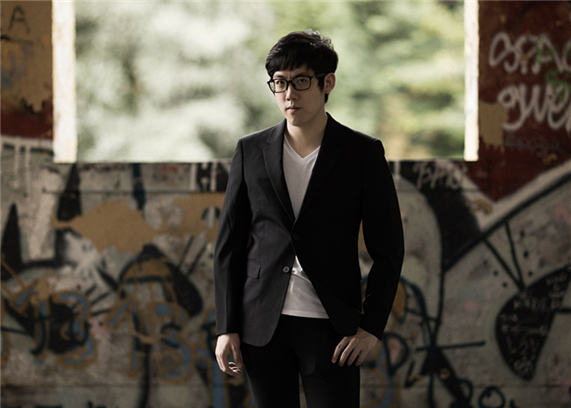
ZHANG Haochen
Since his gold medal win at the Thirteenth Van Cliburn International Piano Competition in 2009, having been the first Asian gold medalist in the history of this top international piano competition, ZHANG Haochen has captivated audiences all over the world with a unique combination of deep musical sensitivity, fearless imagination, and spectacular virtuosity. In 2022, Haochen's collection of essays on classical music entitled On the Other Side of Performing was published in Mainland of China.
In March 2025, Haochen released his latest album on BIS, performing Beethoven Piano Sonata No. 29 in B-flat major “HammerKlavier” and Liszt’s Piano Sonata in B minor, receiving widespread acclaim. His four previous studio albums were also released by BIS.
Highlights of Haochen's recent season include the first coopreation with the Berliner Konzarthaus Orchester, returns to the Munich Philharmonic Orchestra, the Philadelphia Orchestra, Tonhalle-Orchester Zürich, and the Melbourne Symphony Orchestra. He also made his recital debut at the Théâtre des Champs-Élysées in Paris. Furthermore, as the Artist-in-Residence at the National Centre for the Performing Arts, he performed the complete piano concertos of Liszt and Rachmaninoff, among other projects. He also performs the complete piano concertos of Rachmaninoff with Hong Kong Philharmonic in Shenzhen Concert Hall. In addition, he has collaborated with renowned orchestras such as the Lucerne Festival Orchestra, New York Philharmonic Orchestra, London Symphony Orchestra, Staatskapelle Berlin, Staatskapelle Dresden, NDR Elbphilharmonie Orchester, hr-Sinfonieorchester Frankfurt, Orchestre de la Suisse Romande, Orchestre Philharmonique de Radio France, Orchestre national du Capitole de Toulouse, Orchestre de chambre de Paris, Filarmonica della Scala, Orchestra dell'Accademia Nazionale di Santa Cecilia, Luxembourg Philharmonic, Warsaw Philharmonic Orchestra, Mariinsky Orchestra, Israel Philharmonic Orchestra, San Francisco Symphony Orchestra, Los Angeles Philharmonic Orchestra, Atlanta Symphony Orchestra, Sydney Symphony Orchestra, NHK Symphony Orchestra, Singapore Symphony Orchestra, China Philharmonic Orchestra, Hong Kong Philharmonic Orchestra and so on. His performances have reached many of the world's prestigious music venues, including the Berliner Philharmonie, the Carnegie Hall and Lincoln Center in New York, the Kennedy Center in Washington DC, the Royal Albert Hall in London, the Concertgebouw in Amsterdam, the Teatro alla Scala, the Walt Disney Concert Hall in Los Angeles, Suntory Hall in Tokyo, etc. He has collaborated with conductors including Lorin Maazel, Riccardo Chailly, Valery Gergiev, Myung-Whun Chung, Michael Tilson Thomas. Yannick Nézet-Séguin, Tugan Sokhiev, YU Long, and others.
Haochen has already appeared at many of the world's leading festivals, including the BBC Proms, the Lucerne Festival, the Verbier Festival, the Aspen Music Festival, the Festival international de Piano de La Roque d'Anthéron, the Festival Radio France Occitanie Montpellier, the Santa Fe Chamber Music Festival, the La Jolla Music Society's SummerFest and others. As an avid chamber musician, he has collaborated with ensembles such as the Dover, Takács, Tokyo, Shanghai, and Brentano Quartets.
Haochen has studied with the esteemed Professor DAN Zhaoyi, and later with pianists Gary Graffman and Andreas Haefliger.
*Please purchase tickets through authorized channels to avoid counterfeiting. Before completing your purchase, please verify the performance date, time, venue, and seat number carefully. Performance tickets are time-sensitive and limited in availability. Once a transaction has been completed, tickets are non-exchangeable, non-refundable and cannot be reissued if lost. Please double-check all ticketing details and securely retain your physical ticket or electronic order. If you are unable to attend due to personal reasons, please make your own arrangements regarding the use of your tickets. We appreciate your understanding as any inconvenience caused.
*The cast, programme, or other performance details are subject to change and shall be based on the live performance. In the event of major adjustments - such as changes to the performance date or lead cast - please refer to the official announcements issued by the NCPA and follow the relevant procedures as instructed.
*The NCPA opens 90 minutes before performances, and 60 minutes before art education lectures and similar events. Auditorium entry begins 45 minutes before performances. For all performances and events, the Northern entrance serves as the sole public entrance. Please ensure that ticket scanning and security screening are completed prior to entry, and allow sufficient time to avoid delays.
*Tickets must be retained in their original, intact condition. Admission will be denied for tickets lacking a stub, or bearing any alterations, obscured information, or defacement. Each ticket is valid for a single entry on the date of the performance. For certain performances, presentation of original valid identification documents is required. Admission will be granted only when the ticket information corresponds with the presented identification.
*Recommended admission height: 1.2 meters and above. Special provisions may apply to certain performances or events, as indicated on the corresponding ticketing page.
*All attendees are required to undergo security screening upon entry. Smoking and open flames are strictly prohibited within the NCPA premises. Prohibited items include, but not limited to, firearms and replicas, controlled knives, flammable or explosive substances, toxic or hazardous materials, corrosive substances, and radioactive materials. Any prohibited items discovered will be handed over to public security authorities.
*For safety and hygiene reasons, the NCPA does not provide storage services for food, beverages, or similar items. The following items are not permitted inside the NCPA: food and drinks, flags & banners, electronic cigarettes, power banks exceeding 20000mAh, flowers, recording or photography equipment, and oversized luggage.
*Attendees are requested to address appropriately. Admissions will be denied to individuals who are improperly attired or under the influence of alcohol.
*If you are late, please wait quietly in the audience waiting area. Entry will be permitted under the guidance of ushers during appropriate intermissions or between movements, and you are requested to take the nearest available seat with minimal disturbance. For concerts consisting of a single piece - either for the entire performance or a complete half - late arrivals and audience who leave midway will not be admitted.
*All attendees are requested to observe proper performance etiquette. Please keep quiet and remain seated throughout the entire performance. Mobile phones should be turned off or set to silent mode, and calls should not be made in the auditorium. Photography, audio, or video recording of the performance is strictly prohibited without prior permission. The use of flashlights, including phone flashlights, is not allowed.
* After the performance, please exit the auditoriums in an orderly manner. Loitering is discouraged.



 This page provides performance information only.
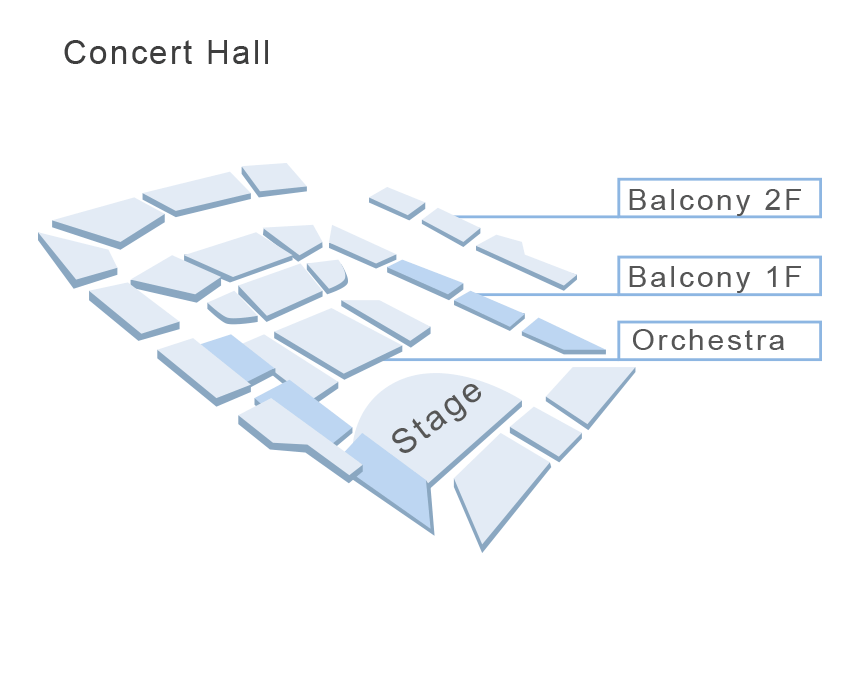 音乐厅
音乐厅
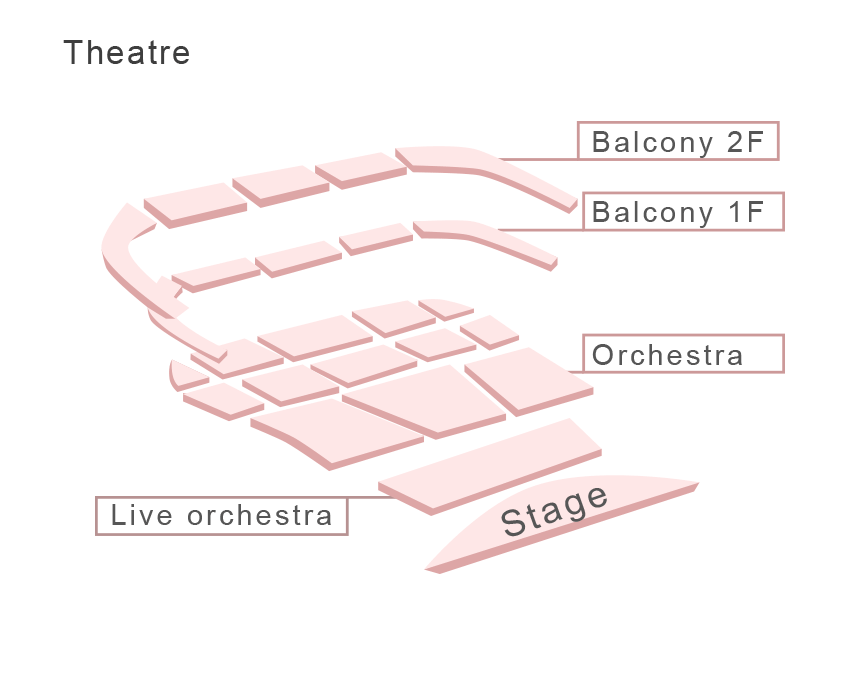 戏剧场
戏剧场
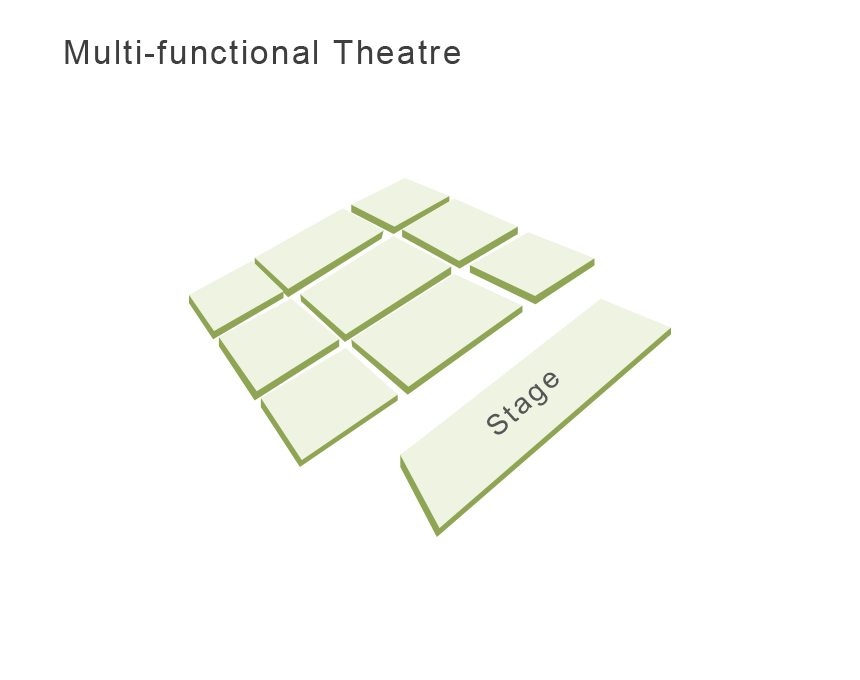 小剧场
小剧场
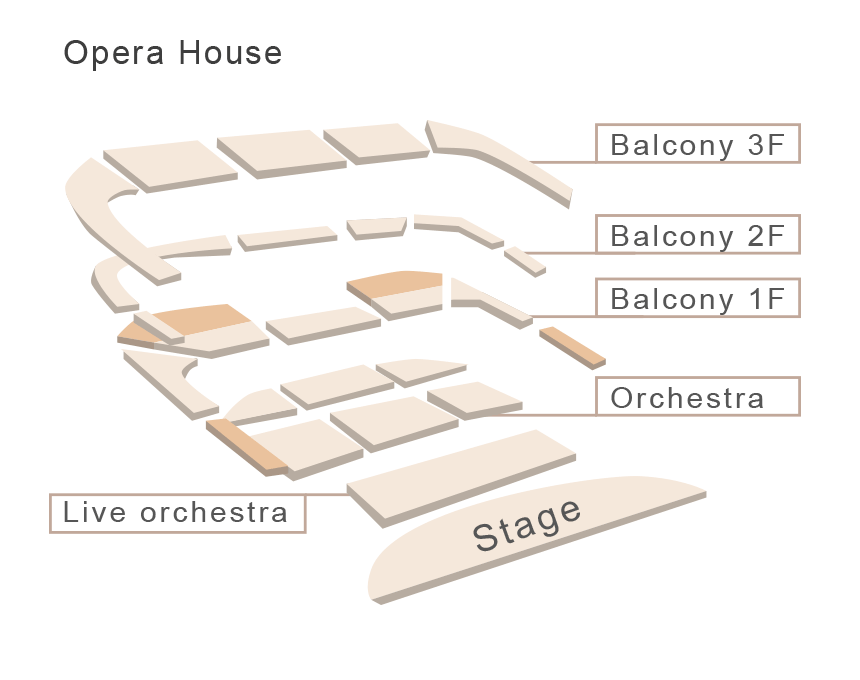 歌剧院
歌剧院